CRST Expedited Reviews 2026: Orientation Pay & Contract
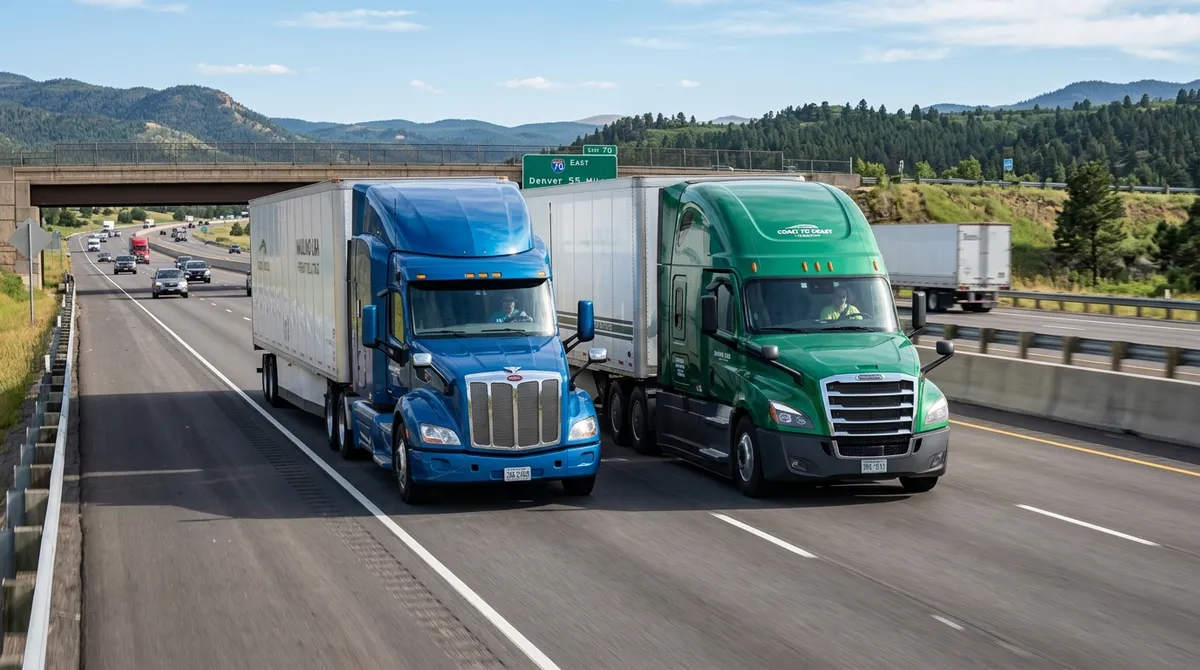
CRST Expedited comes up in almost every conversation about free CDL training. New drivers hear "they'll pay for your license" and start filling out applications. But driver reviews tell a more complicated story — one involving a commitment contract, team driving, modest pay, and equipment that won't win any awards. This breakdown covers what CRST actually offers in 2026, what drivers say after they've lived it, and how to decide whether it makes sense for you.
CRST at a Glance
CRST Expedited is headquartered in Cedar Rapids, Iowa, and operates one of the largest team-driving fleets in the country. The company runs dedicated and over-the-road routes, primarily using two-driver teams to maximize miles and keep trucks rolling around the clock. Their CDL training program is the front door for thousands of new drivers every year.
| Category | Details |
|---|---|
| Headquarters | Cedar Rapids, IA |
| Fleet size | ~4,500+ trucks (team driving focus) |
| Freight type | Dry van, temperature-controlled, expedited |
| Driving model | Team OTR (most routes) |
| CDL training | Company-paid, ~3–4 weeks |
| Contract length | 6–12 months (varies by program) |
| Starting pay range | $0.28–$0.34 CPM (team split) |
| Home time | Limited — typically every 3–4 weeks |
| Benefits | Medical, dental, vision after eligibility period |
CRST consistently ranks among the top five largest carriers in the U.S. by truck count. That scale has real advantages — steady freight, a structured training pipeline, and a recognizable name on your resume when you start applying elsewhere. But size alone doesn't tell you what it's actually like to drive for them.
The CDL Training Program: What You're Actually Agreeing To
CRST's training program is one of the most straightforward entry points into a CDL in the industry. You don't pay tuition upfront. The company covers the cost of your Class A license — typically $3,000–$7,000 worth of training. In exchange, you commit to driving for CRST for a set period after you get your license.
Here's how it usually works: CRST trains you at one of their training facilities (or partner schools), covers your CDL exam fees, and then puts you through an orientation and team-pairing process. Training takes roughly three to four weeks. After that, you're assigned a trainer-driver and then eventually a regular team partner.
CRST's training contract requires you to work for the company for a specified period — typically 6 to 12 months — after completing training. If you leave before fulfilling the commitment, you may owe the full cost of training back to CRST, sometimes collected through debt collection or legal action. Drivers have reported receiving invoices for $3,000–$6,000+ after leaving early. Before signing, get the exact repayment terms in writing and understand the exit conditions. A contract that sounds like "free training" can become a financial liability if the job turns out not to be a fit.
The training itself gets decent marks from most drivers — instructors are generally experienced, and the CDL prep is solid. The issue isn't the training quality. It's what comes after: you're locked into a team-driving OTR gig for months, regardless of whether you like your partner, the miles, the routes, or the equipment.
Team Driving at CRST: The Honest Reality
Team driving is CRST's core model. Two drivers share one truck, alternating between driving and sleeping in the bunk while the other drives. The idea is maximum miles — trucks run nearly 24 hours a day, which means higher gross CPM and faster experience accumulation for both drivers.
In practice, team driving is a lifestyle trade-off that many new drivers underestimate. You're sleeping in a moving truck while a stranger — or someone you barely know — drives. Your sleep quality, your schedule, and your mental health are tied directly to how well you work with your partner. A good partner makes the job bearable. A bad one can make it miserable within days.
Common complaints from CRST drivers in online communities and review platforms center on:
- Partner mismatches — drivers report being paired with people who have wildly different habits, sleep schedules, hygiene standards, or communication styles
- Limited personal space — sharing a cab continuously with another person for weeks at a stretch is genuinely taxing
- Dispatch pressure to keep moving — team rigs are expected to turn miles; rest stops, delays, and personal errands can create friction with dispatch
- Minimal home time — most drivers get home every three to four weeks, sometimes longer depending on route assignments
That said, some drivers genuinely thrive in the team model. If you want to accumulate miles fast and build experience quickly, team driving with CRST does exactly that. You can log significantly more miles in your first year than most solo OTR drivers, which accelerates your eligibility at other carriers.
Pay: What CRST Drivers Actually Make
Pay is one of CRST's most consistent pain points in driver reviews. Because you're team driving, the per-mile rate gets split between both drivers. That means each driver earns roughly half of what a solo driver at the same CPM rate would bring home.
Starting CPM rates for CRST team drivers generally fall in the $0.28–$0.34 range per driver, though rates fluctuate with experience and program type. On a week where your team runs 5,000 miles, you'd earn roughly $700–$850 gross before taxes and deductions. After benefits, taxes, and any deductions, take-home pay in the early months is tight.
Drivers report that pay improves with tenure and that bonuses for safety, performance, and fuel efficiency add up. But for the first six to twelve months — which is precisely the contract window — pay is below what many drivers expected based on the job posting.
Compare that to a solo OTR driver at a mid-tier carrier earning $0.55–$0.65 CPM on 2,500 miles a week, and you can see why experienced drivers call CRST a launching pad, not a destination. The math works better once you move on.
If pay transparency is important to you, read our breakdown of trucking company red flags before accepting any job offer — vague pay structures and hidden deductions are among the top warning signs.
What CRST Drivers Appreciate
Despite the criticism, CRST has genuine strengths that show up consistently in driver feedback. These aren't marketing talking points — they're what drivers who've been through the program actually say after the contract ends.
- The CDL is paid for, no loans attached. For drivers who can't afford a private trucking school or don't want to take on debt, CRST is a real path into the industry. The training is structured and gets you license-ready.
- Miles come fast. Team driving means you accumulate experience quickly. Drivers who complete the CRST contract often have 100,000–150,000+ miles logged, which opens doors at better-paying carriers.
- Freight is consistent. CRST's volume is large enough that drivers rarely sit idle waiting for loads. The company moves freight — that's one thing it does reliably.
- The name carries weight early in your career. CRST's size and structure mean that new drivers get solid procedural training — logs, pre-trips, load securement — that becomes a foundation for everything after.
- Benefits exist. Health insurance, 401(k), and other benefits are available, which matters for drivers transitioning from uninsured work or other industries.
The theme in positive reviews isn't "CRST is a great company." It's "CRST did what I needed to get started, and I'm glad I stuck it out." That distinction matters when you're deciding whether to apply.
The Exit Strategy: CRST as a Stepping Stone
The most consistent pattern in CRST driver reviews is that drivers leave after their contract ends. Not most drivers — almost all of them. And most leave not because they hate trucking, but because better opportunities open up once they have a year of verifiable experience.
After 12 months and 100,000+ miles at CRST, a driver becomes eligible at carriers like Werner, Swift, J.B. Hunt, or regional carriers offering solo routes, more home time, and significantly higher pay. That transition is the CRST play for most people who go in with eyes open.
The drivers who struggle most aren't those who use CRST strategically — it's the ones who signed without understanding the contract, expected solo routes, or didn't realize home time would be so scarce. If you go in with a plan and a timeline, the contract becomes a structured apprenticeship rather than a trap.
One practical note: when you leave CRST, your DAC report will follow you. Make sure your record is clean — no at-fault accidents, no policy violations, no termination-for-cause entries. A clean DAC makes the transition to a better carrier smooth. If you've had issues flagged on your DAC, here's how to dispute a DAC report before it affects your next application.
Equipment and Conditions
Equipment complaints are one of the more frequent themes in CRST driver reviews, particularly from drivers who came in expecting newer trucks.
CRST runs a mix of truck ages across its fleet. Drivers report being assigned trucks with higher mileage, older cab interiors, and maintenance issues that take longer to resolve than they'd like. Pre-trip inspection complaints are common — drivers note finding issues that weren't properly addressed from the previous cycle.
The bunk situation matters more for team drivers than it does for solo. If you're spending 10 hours in the sleeper while your partner drives, the condition of that bunk — mattress quality, HVAC reliability, noise insulation — directly affects your rest and therefore your safety. Reviews are mixed here; some drivers describe functional if aging equipment, others describe constant issues with climate control and electrical systems.
CRST has been updating portions of its fleet, and newer trucks do exist in the mix. But there's no guarantee of what you'll be assigned, especially as a new driver. If equipment standards matter to you, ask directly during orientation what the typical truck age is for new team drivers in your region.
Should You Join CRST in 2026?
The honest answer depends on where you're starting from and what you need.
CRST makes sense if:
- You have no CDL and no money for private training school
- You're genuinely okay with team driving and low home time for 6–12 months
- You want a structured entry point with consistent freight
- You have a clear exit plan — you know where you're going after the contract
- You've read the repayment terms and understand the financial commitment if you leave early
CRST is probably the wrong fit if:
- You need to be home regularly (family, dependents, medical needs)
- You want solo driving from the start
- You're hoping for competitive pay during the contract period
- You're not prepared to share a cab with a stranger for months
- You're uncomfortable with older equipment and variable maintenance quality
CRST in 2026 is still what it's been for years: a functional on-ramp into trucking that comes with real trade-offs. The company hasn't dramatically improved its pay structure or home time policies. What it still offers — paid training, fast miles, and consistent freight — remains genuinely useful for the right candidate.
If you're comparing carriers and want to see how CRST stacks up against other options, browse verified carrier reviews on Oculus Reviews to read what drivers say across dozens of companies before you commit.
FAQ
How long is the CRST training contract?
Most CRST training contracts run 6 to 12 months of active employment after completing CDL training. The exact length depends on your program and when you started. If you leave before fulfilling the contract, you may owe back the cost of training — typically $3,000–$6,000 depending on what CRST paid for your schooling.
Does CRST offer solo driving positions?
CRST's primary model is team driving. Solo positions are limited and typically require more experience than a new CDL holder has. If solo driving is important to you, CRST may not be the right first carrier — consider carriers that offer solo OTR routes for new drivers.
What is CRST's starting pay per mile in 2026?
Starting CPM for CRST team drivers typically falls in the $0.28–$0.34 range per driver after the team split. Rates vary by program, region, and tenure. Performance bonuses and safety incentives can add to total compensation over time.
How often do CRST drivers get home?
Most CRST OTR team drivers get home every three to four weeks, though some report longer stretches depending on route assignments. Home time is limited by the team driving model — trucks are expected to keep moving to maximize miles.
Is CRST a good company for experienced drivers?
Experienced drivers generally find better pay and conditions at other carriers. CRST's value proposition is strongest for new drivers who need paid training and fast mile accumulation. Most experienced drivers who join CRST do so for specific route or freight reasons, not pay.
What happens to my DAC report when I leave CRST?
CRST reports employment history to DAC (now HireRight) like most large carriers. Your driving record, any accidents, and your departure reason can appear on your DAC report and be visible to future employers. Leaving in good standing — no violations, no termination for cause — is important for your next application. If anything negative appears, you have the right to dispute it.
Researching your next carrier move? Read driver reviews for hundreds of carriers on Oculus Reviews — real feedback from drivers, no fluff.
About the Author
CDL driver since 2016, owner-operator, fleet operator. Co-founder of Oculus Reviews.
Join Oculus Reviews Today
Create your free account and start building your professional trucking reputation.
Related Articles

How Trucking Companies Can Improve Their Online Reputation in 2026
A practical 2026 guide for carriers: claim your profile, respond to driver reviews, fix what drivers complain about, and turn reputation into recruiting.

Why Driver Reviews Are the Future of Trucking Recruitment
Verified driver reviews are reshaping trucking recruitment as leverage shifts to drivers. Why reputation data now decides which carriers attract and keep talent.

Werner Enterprises Driver Reviews 2026: Dollar General Pay
Werner drivers reveal real pay ranges, the Dollar General dedicated account pros and cons, DAC report risks, and is Werner still worth signing on in 2026?