Foley Alternatives for Small Trucking Fleets in 2026
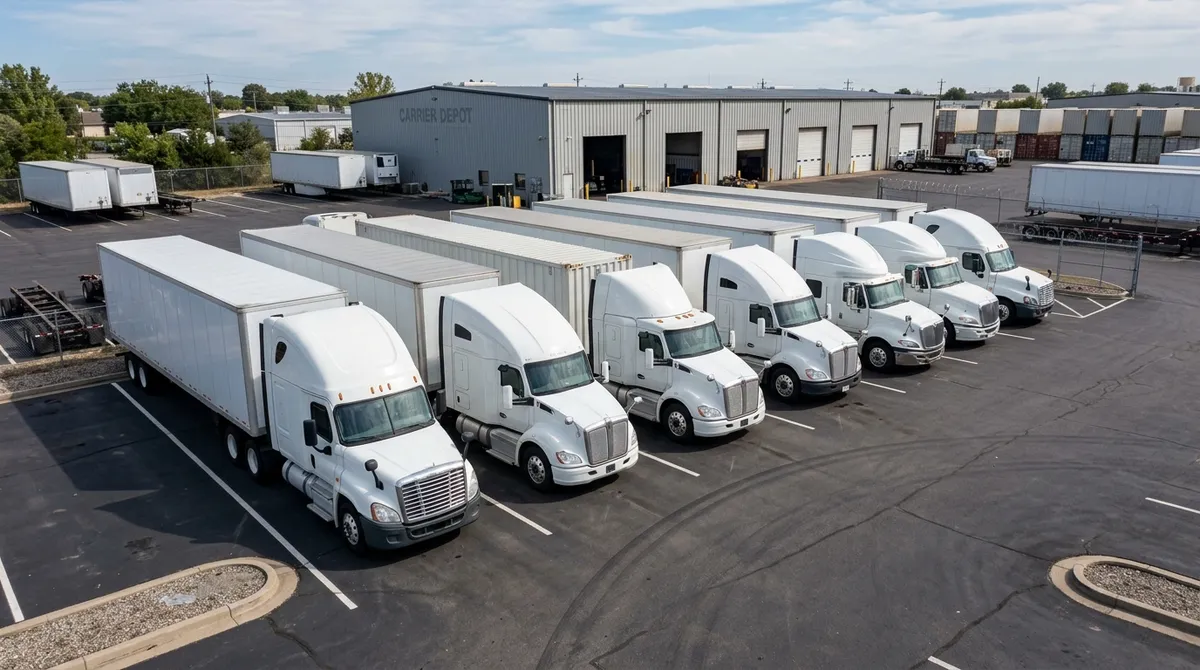
If you've been researching DOT compliance vendors, Foley has probably come up. It's been around since 1992, and for good reason — it's one of the most recognized names in trucking compliance services. But "recognized" and "right fit" aren't the same thing, especially if you're running a small fleet.
This guide breaks down exactly what Foley does, where it makes sense, where it doesn't, and what a small carrier should actually look for in 2026 when evaluating compliance tools.
1. What Foley Carrier Services Does
Foley (foley.io) is a compliance services company, not a software platform. That distinction matters. Their core offering is a managed service model — your account team handles driver qualification file (DQF) management on your behalf. You hand off the work; they process it.
Their service suite covers:
- Driver Qualification File (DQF) management — collection, organization, and expiration tracking for your driver files per FMCSA Part 391 requirements
- Drug and alcohol testing program management — random pool enrollment, pre-employment, post-accident, and reasonable suspicion testing coordination
- MVR monitoring — ongoing motor vehicle record pulls and violation alerts
- DOT audit support — preparation assistance when FMCSA comes knocking
- Employment verification — prior employer inquiry and response handling
The model is simple in concept: you give Foley access and they manage compliance on your behalf. For fleets with dedicated compliance staff who want to offload execution, this can work well.
2. Where Foley Falls Short for Small Fleets
The managed service model has real tradeoffs — and they hit harder the smaller your fleet is.
Pricing isn't transparent
Foley doesn't publish pricing. You request a quote, go through a sales process, and receive a proposal tailored to your fleet size and service package. For a 10-truck operation, that sales cycle is friction you don't need. You also won't know if the price you're quoted reflects actual market rates until you've already invested time in the process.
You're dependent on their timeline, not yours
When a driver needs to onboard fast — a Monday morning call where someone has to roll by noon — waiting on a managed service team isn't practical. Small carriers operate in real time. Compliance that requires a back-and-forth with an account team can slow down hiring at exactly the wrong moment.
Setup complexity for small teams
Foley's platform is built for organizations that have compliance staff managing the relationship. If you're a safety director wearing four other hats, the overhead of coordinating with an external team adds to your load rather than reducing it.
No driver trust or community layer
Foley operates entirely on the carrier side. There's no driver review system, no way for drivers to build a portable reputation, and no community intelligence about how drivers perform across employers. In a tight driver market, that's a significant gap — you're making hiring decisions with less information than you could have.
Enterprise focus
The product and support model is optimized for mid-to-large fleets with dedicated compliance departments. Small carriers get the same product but without the scale to justify the cost or the staff to fully leverage the service.
3. The Managed Service vs. Software Tradeoff
Before you pick a vendor, it's worth being clear on what you actually need.
Managed service means someone else does the work. The compliance team handles file collection, tracks expirations, sends reminders, processes MVR pulls, and manages your testing program. You pay for execution. This makes sense if you have the budget and genuinely don't have the bandwidth to manage compliance in-house.
Compliance software means you have the tools to do it yourself — efficiently. Files live in a structured vault. Expiration alerts come to you. DOT audit exports are one click. Drug test orders go directly to testing facilities. You maintain control and visibility. You pay for the platform, not for someone else's labor.
The financial difference is significant. Managed services carry labor costs built into the price. Software carries infrastructure costs. For a 15-truck fleet, that gap can easily run into thousands of dollars annually.
The control difference matters too. With a managed service, if something falls through the cracks, you find out after the fact. With software, you're watching the dashboard — you see the expiration coming 60 days out, not the day before an audit.
4. What a Modern DQF Platform Offers
The compliance software category has matured. What you should expect from any modern platform in 2026:
Structured DQF vault
Every required document — CDL, medical certificate, MVR, application, road test, prior employment verification, annual review — stored in a per-driver file with version history. No spreadsheets, no paper folders, no hunting through email attachments.
Expiration tracking with automated alerts
Medical certificates expire. CDLs expire. Annual reviews come due. A real platform surfaces these before they lapse, not after. Alerts go to the safety director, fleet manager, or both — whatever makes sense for your operation.
DOT audit export
When FMCSA schedules a compliance review, you need to produce files fast. A proper DQF platform generates a clean audit-ready export in minutes, not hours of digging through file cabinets.
Post-accident and RTD workflows
Return-to-duty processes after a positive drug test have specific steps. Post-accident drug and alcohol testing has a defined timeline. A platform that walks you through these workflows reduces compliance risk and protects you in a dispute.
Onboarding checklist
New driver onboarding is where compliance gaps most often start. A structured checklist that confirms each required document has been collected before a driver's first dispatch removes the guesswork.
Background checks and employment verification
Integrated background screening (via partners like Checkr) and prior employment verification built directly into the onboarding workflow means fewer separate vendor relationships to manage.
Oculus Reviews covers all of these. You can read the full breakdown in our DQF software guide for carriers.
5. Foley vs. Oculus Reviews Comparison
Here's a direct side-by-side of the two approaches:
| Feature / Factor | Foley | Oculus Reviews |
|---|---|---|
| Service model | Managed service (they do it for you) | Self-serve software (you stay in control) |
| DQF management | ✅ Handled by their team | ✅ Structured vault with expiration alerts |
| Drug & alcohol testing | ✅ Full program management | ✅ Integrated ordering + RTD tracker |
| MVR monitoring | ✅ Ongoing monitoring | ✅ On-demand pulls + alerts |
| DOT audit support | ✅ Prep assistance from their team | ✅ One-click audit export |
| Background checks | ✅ Available | ✅ Integrated via Checkr |
| Employment verification | ✅ Handled by their team | ✅ Built into onboarding workflow |
| Driver reviews / reputation layer | ❌ Not available | ✅ Two-sided reviews |
| Driver community trust layer | ❌ Not available | ✅ Driver profiles with verified history |
| Transparent pricing | ❌ Quote-based, no public rates | ✅ Visible pricing tiers |
| Best fit | Mid-to-large fleets with compliance staff | Small carriers (5–50 trucks) who want control |
| Setup complexity | High — account team onboarding required | Low — self-serve, start same day |
| Real-time visibility | Depends on account team responsiveness | ✅ Live dashboard you control |
The core difference: Foley is a service. Oculus Reviews is a platform. Foley is better if you want to hand off compliance entirely. Oculus Reviews is better if you want to own your compliance process and pay for tools, not labor.
One dimension Foley doesn't address: as AI-powered driver hiring tools emerge, they'll need verified, structured driver data — not just compliance documents. Platforms that combine DQF management with driver reputation data and employment verification are building the infrastructure these AI tools will plug into. That's a capability gap managed compliance services weren't designed to fill.
6. When Foley Is Actually the Right Choice
This is worth saying directly: Foley is a legitimate option for the right fleet.
If your operation meets the following criteria, Foley likely makes sense:
- 50+ trucks where the per-driver cost of managed services is easier to absorb and the complexity justifies external management
- You have a dedicated compliance or safety department that can manage the vendor relationship and review their work
- You genuinely don't want to touch compliance — you want it handled, full stop, and you're willing to pay for that
- Drug and alcohol testing program administration is a headache at your scale and you want it completely offloaded
- You're already working with their team and have an established relationship — switching costs are real
Foley has 30+ years in this industry. They know the regulations. If your budget allows and you want a hands-off approach, they can deliver that. The issue isn't quality — it's fit for small fleets where cost sensitivity and speed matter more than white-glove service.
7. How to Evaluate Any DOT Compliance Solution
Whether you're looking at Foley, Oculus Reviews, or another vendor, use these questions to pressure-test the fit:
1. Can you see your own files in real time?
With a managed service, your data lives in their system. Ask specifically: can you pull a report of all driver file statuses right now, without calling anyone? If the answer is "you'd need to contact your account manager," that's a dependency you should price in.
2. What happens when a driver needs to roll in 4 hours?
Walk through the onboarding scenario for an urgent hire. How many steps require vendor action vs. steps you can complete yourself? Time-to-dispatch matters in real operations.
3. How is pricing structured and what does it scale to?
Get the per-driver cost at your current fleet size and at double your fleet size. Some vendors look affordable at 10 trucks and expensive at 25. Know before you sign.
4. What does a DOT audit export look like?
Ask for a sample. A legitimate compliance platform should be able to produce a complete, organized driver file package in minutes. If the answer is vague, that's a risk.
5. What's the driver-side experience?
Compliance isn't just a carrier-side problem. Drivers submit documents, complete forms, and need to understand their status. Does the platform help them do that, or does everything route through your safety department?
6. Is there any trust intelligence about the drivers you're hiring?
Background checks and MVRs tell you about history. Verified reviews from prior employers tell you about real-world performance. Ask every vendor what they offer on that front — the gap between what Foley offers and what a review platform offers is significant.
8. Frequently Asked Questions
Is Foley worth it for a fleet under 20 trucks?
For most fleets under 20 trucks, a self-serve DQF platform is a better fit. The managed service model works best when you have the scale to justify the cost and staff to manage the vendor relationship. Under 20 trucks, you're usually paying a premium for services you could handle with good software in a fraction of the time.
What's the difference between DQF software and a compliance service?
DQF software gives you the tools to manage driver qualification files yourself — structured storage, expiration alerts, audit exports, onboarding checklists. A compliance service like Foley does the management work for you. Software costs less; services cost more but offload labor. The right choice depends on your bandwidth and budget.
Does Oculus Reviews handle drug and alcohol testing?
Yes. Oculus Reviews includes integrated drug and alcohol testing ordering, random pool management, and a return-to-duty (RTD) tracker that walks you through the required steps after a positive test result.
How does Oculus Reviews handle DOT audits?
Oculus Reviews generates a complete, audit-ready DQF export for any driver in your fleet. All required documents — CDL, medical certificate, MVR, application, prior employment verification, annual review — are organized and packaged for FMCSA review. You can produce this in minutes, not days.
What's the driver review feature and why does it matter?
Oculus Reviews includes a two-sided review system: carriers can leave reviews of drivers (visible to other carriers with consent controls), and drivers can review carriers (publicly visible). This creates a portable reputation layer that helps carriers make better hiring decisions and gives good drivers a way to stand out. No compliance-only vendor — including Foley — offers this.
How quickly can I get started with Oculus Reviews?
Setup is self-serve. Most carriers are up and running the same day — you don't need to wait for an account team to configure your environment or schedule an onboarding call before you can use the platform.
See How It Works for Your Fleet
If you're running 5–50 trucks and want to see what modern DQF management looks like without the managed service price tag, we'll walk you through the platform and show you exactly how compliance, onboarding, and driver reviews work together.
Request a DemoAbout the Author
CDL driver since 2016, owner-operator, fleet operator. Co-founder of Oculus Reviews.
Join Oculus Reviews Today
Create your free account and start building your professional trucking reputation.
Related Articles

How Trucking Companies Can Improve Their Online Reputation in 2026
A practical 2026 guide for carriers: claim your profile, respond to driver reviews, fix what drivers complain about, and turn reputation into recruiting.

Why Driver Reviews Are the Future of Trucking Recruitment
Verified driver reviews are reshaping trucking recruitment as leverage shifts to drivers. Why reputation data now decides which carriers attract and keep talent.

Werner Enterprises Driver Reviews 2026: Dollar General Pay
Werner drivers reveal real pay ranges, the Dollar General dedicated account pros and cons, DAC report risks, and is Werner still worth signing on in 2026?