Heartland Express Driver Reviews 2026: Pay Per Mile & CFI
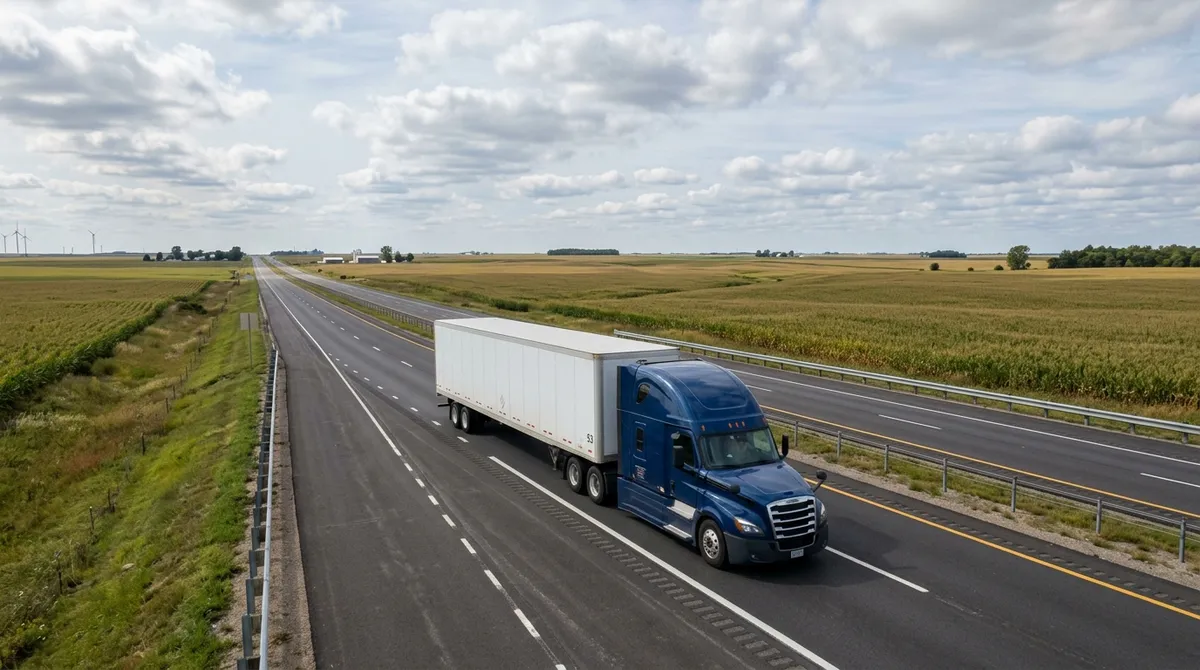
Heartland Express at a Glance
| Category | Details |
|---|---|
| Pay Range (CPM) | $0.52–$0.62 CPM (experienced OTR) |
| Annual Earnings | $55,000–$80,000 |
| Home Time | 2–3 days per 3–4 weeks out (OTR) |
| Equipment | Dry van, Peterbilt / Freightliner tractors |
| FMCSA Safety Rating | Satisfactory |
| Freight Type | Dry van OTR, some regional |
| HQ | North Liberty, Iowa |
| Best For | Experienced OTR drivers who prioritize consistent miles |
Heartland Express has been running dry van truckload freight since 1978. Over the last decade they've grown aggressively through acquisition — picking up CFI (Con-way's truckload division) and Smith Transport. That growth has reshaped the company in ways that matter directly to drivers: dispatch culture, equipment consistency, and home time reliability have all shifted. If you're considering Heartland in 2026, here's what you need to know before you sign.
What Heartland Express Drivers Say
Drivers on trucking forums in 2025 and early 2026 describe Heartland as a company that delivers consistent miles but pushes hard on utilization. The phrase "they run you like a machine" shows up repeatedly. That's not entirely negative — if your priority is maximizing CPM earnings and you don't mind long stretches away from home, Heartland will keep your wheels turning.
Post-acquisition friction is a real theme. Legacy CFI drivers in particular report that promises made at hire — especially around regional runs and home time frequency — didn't survive the integration process. Several drivers report dispatchers changing after the acquisition and the new team being less responsive to personal requests. Smith Transport drivers echo similar feedback: the culture at the absorbed companies was different, and the transition felt abrupt rather than managed.
On the positive side, drivers consistently praise the equipment. Heartland runs a relatively late-model fleet, and breakdowns are less frequent than at carriers running older iron. Maintenance response gets decent marks. Pay is described as average-to-decent for OTR dry van — not the highest in the industry, but consistent and predictable.
One persistent complaint: dispatch communication quality varies heavily by terminal. Drivers who landed at better-run terminals report good experiences. Drivers at terminals that absorbed CFI or Smith staff report more friction and inconsistency.
Pay: Real Numbers
For experienced drivers (2+ years OTR), Heartland Express pays in the range of $0.52–$0.62 CPM in 2026. Newer drivers or those coming through training programs start lower — typically $0.45–$0.50 CPM — with increases tied to mileage thresholds and time with the company.
Annual earnings at Heartland depend almost entirely on miles driven. At 110,000–120,000 miles per year (which Heartland pushes for), you're looking at $60,000–$74,000 gross for experienced drivers. Top performers who maximize their hours and stay flexible on home time can reach $80,000+.
Accessorial pay is where Heartland falls short relative to some competitors. Detention pay kicks in, but drivers report it can be slow to process. Layover pay exists but the thresholds require significant waiting time before it activates. If you're measuring total compensation rather than just CPM, factor that gap in.
Benefits include medical, dental, vision, 401(k) with company match, and paid vacation that kicks in after one year. The benefits package is competitive for the dry van OTR segment, though not as generous as some LTL or union carriers.
Home Time
This is where Heartland's reviews get complicated. The company advertises home time opportunities — and technically, home time is available. The reality for most OTR drivers is 2–3 days home for every 3–4 weeks out. That's standard OTR math, and Heartland doesn't deviate much from it.
Regional opportunities exist but are not evenly distributed. Drivers near major terminals in certain corridors report better home time frequency. Drivers in less-served regions say the regional promise didn't materialize after the acquisition shuffle. If home time is your top priority, get specifics in writing before signing — ask your recruiter which terminal you'd be assigned to and what the home time average actually looks like there, not company-wide.
The post-acquisition issue compounds home time problems. Some legacy CFI and Smith drivers were promised better home time as part of their existing agreements. When dispatch priorities shifted after integration, those arrangements didn't always survive. This is a known pattern at companies that grow through acquisition — promises made before the merger don't always hold after it.
Equipment and Working Conditions
Heartland runs Peterbilt and Freightliner tractors, mostly within the last 3–5 years at the main fleet. Post-acquisition equipment varies — some of the absorbed CFI and Smith equipment is older, and the process of standardizing the fleet takes time. At established Heartland terminals, equipment quality is genuinely good. At newly integrated terminals, it's more variable.
The company runs 53-foot dry van trailers. No flatbed, no refrigerated, no specialty — this is a pure dry van operation. Loads are primarily no-touch or drop-and-hook, which most drivers appreciate. Touch freight does show up depending on customer assignment.
Amenity packages in newer trucks include inverters, APUs or idle management systems, and comfortable cab setups. Older absorbed equipment may lack some of these features. Ask specifically about the age and spec of the truck you'd be assigned to — it varies.
ELD compliance is via PeopleNet. Drivers report it works reliably enough, though some find the interface less intuitive than competing systems. No major complaints about ELD functionality specifically.
Who Should (and Shouldn't) Apply
Good fit for:
- Experienced OTR drivers who want consistent dry van miles and don't need to be home every week
- Drivers who prioritize equipment quality over top-end CPM
- Drivers near well-established Heartland terminals (not recently integrated locations)
- Drivers who want a major carrier with predictable systems and a benefits package
Not a good fit for:
- Drivers who need reliable weekly home time — this is not a regional or local carrier
- Drivers coming from legacy CFI or Smith backgrounds expecting their previous culture to survive
- Drivers seeking the highest CPM in the industry — Heartland is competitive but not a top payer
- Anyone who needs strong detention and layover pay — Heartland's accessorial pay is a weak spot
How to Evaluate Heartland Express Before You Sign
Heartland runs a big operation and there's meaningful variance between terminals. Your experience will depend heavily on which terminal you're assigned to and which dispatch team you land with. Before accepting an offer:
- Ask which terminal you'd be dispatched from. Is it a legacy Heartland terminal or a recently absorbed CFI/Smith location? Research reviews specific to that terminal if possible.
- Get home time expectations in writing. Ask for average home days per month, not just "we offer home time." Vague promises don't hold up when dispatch priorities shift.
- Verify the CPM offer against total comp. Factor in detention pay thresholds, layover policy, and accessorial rates — not just base CPM.
- Ask about equipment age at your assigned terminal. A 2024 Peterbilt and a 2019 CFI hand-me-down are very different working conditions.
- Talk to current drivers if you can. Trucking Facebook groups and forums have drivers from specific Heartland terminals. Ask the specific questions you have.
For a broader look at warning signs to watch for across any carrier, read our guide on trucking company red flags. And if you want to see how Heartland stacks up against the full field, check out our best trucking companies to work for in 2026.
See reviews for Heartland Express and 500+ carriers at Oculus Reviews. Real drivers, verified employment, no fake reviews.
FAQ
What does Heartland Express pay per mile in 2026?
Experienced OTR drivers earn $0.52–$0.62 CPM. At 110,000–120,000 miles annually, that puts gross earnings between $60,000–$74,000. Top mileage earners can reach $80,000+.
How is home time at Heartland Express?
Standard OTR — expect 2–3 days home for every 3–4 weeks out. Regional options exist at some terminals but aren't guaranteed. Always verify home time frequency specific to your assigned terminal before signing.
Did Heartland Express acquire CFI and Smith Transport?
Yes. Both acquisitions happened over the past several years. Integration has been ongoing. Legacy drivers from both companies report cultural changes post-acquisition, particularly around dispatch relationships and home time reliability.
What equipment does Heartland Express run?
Primarily Peterbilt and Freightliner tractors with 53-foot dry van trailers. Main fleet equipment is newer (last 3–5 years). Absorbed equipment from CFI and Smith varies in age and spec depending on the terminal.
Is Heartland Express good for new CDL drivers?
They accept some recent graduates, but Heartland is better suited to drivers with experience. Training pay and terms for new CDL holders are below what dedicated training programs at other carriers offer. If you need a training program, compare options before defaulting to Heartland.
How does Heartland Express treat drivers post-acquisition?
Mixed results. Drivers at well-established Heartland terminals report solid experiences. Drivers from absorbed companies report that pre-acquisition commitments (especially on home time and dispatch relationships) didn't always carry over. Due diligence on which terminal you're assigned to matters more than company-wide averages.
About the Author
CDL driver since 2016, owner-operator, fleet operator. Co-founder of Oculus Reviews.
Join Oculus Reviews Today
Create your free account and start building your professional trucking reputation.
Related Articles

How Trucking Companies Can Improve Their Online Reputation in 2026
A practical 2026 guide for carriers: claim your profile, respond to driver reviews, fix what drivers complain about, and turn reputation into recruiting.

Why Driver Reviews Are the Future of Trucking Recruitment
Verified driver reviews are reshaping trucking recruitment as leverage shifts to drivers. Why reputation data now decides which carriers attract and keep talent.
Werner Enterprises Driver Reviews 2026: Dollar General Pay
Werner drivers reveal real pay ranges, the Dollar General dedicated account pros and cons, DAC report risks, and is Werner still worth signing on in 2026?