Swift Transportation Reviews 2026: Pay After Knight Merger
Swift Transportation is one of the most talked-about carriers in trucking — and not always for the right reasons. If you've spent five minutes in a trucker Facebook group or browsed r/Truckers, you've seen the jokes, the warnings, and the occasional "actually it wasn't that bad" thread. Before you sign a lease or accept a training offer, here's an honest look at what Swift drivers are actually saying in 2026 — pay, home time, dispatch, and what changed after the Knight merger.
Swift Transportation at a Glance
| Parent Company | Knight-Swift Transportation Holdings |
|---|---|
| Freight Type | Primarily dry van, OTR |
| Pay Range (CPM) | $0.40 – $0.58 CPM (experience-dependent) |
| CDL Training Program | Yes — company-sponsored |
| FMCSA Safety Rating | Satisfactory |
| Fleet Size | One of the largest carriers in North America |
| Home Time Policy | Varies by terminal and dispatcher |
| Known For | New driver training, dry van OTR, terminal-to-terminal inconsistency |
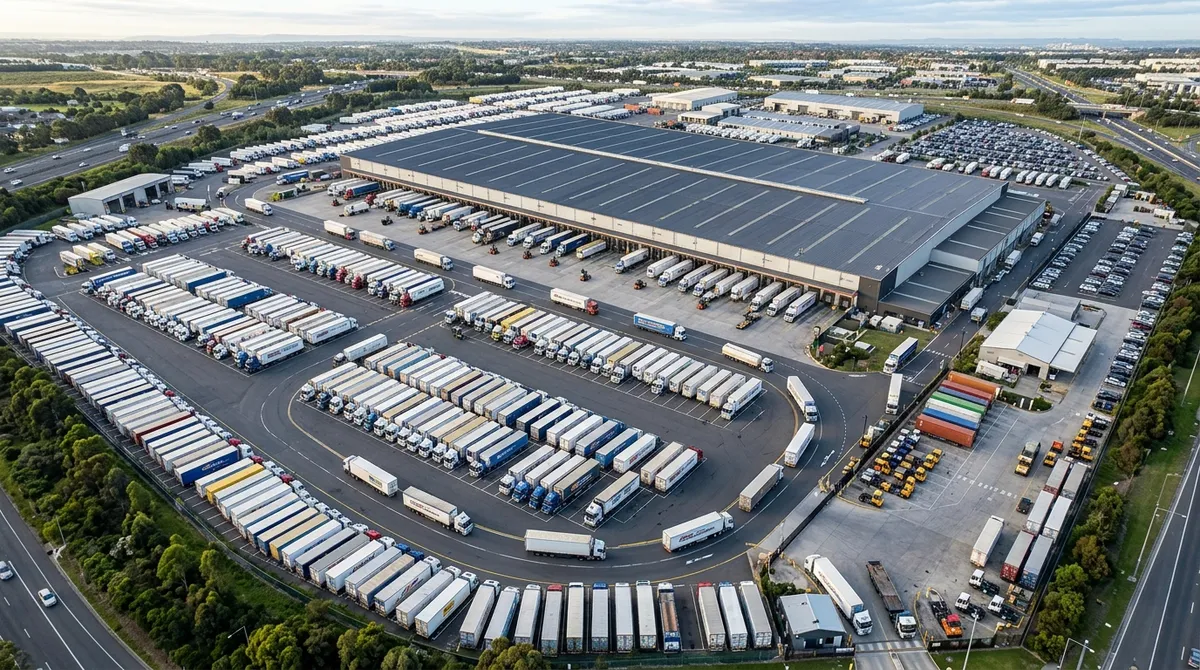
Swift operates as part of Knight-Swift, one of the largest trucking networks on the continent. They run millions of dry van miles a year, have terminals spread across most of the country, and maintain a CDL training pipeline that puts a lot of new drivers behind the wheel every year. That scale matters — for better and worse.
The "Swift Driver" Stereotype: How Much Is True in 2026?
If you've been around trucking long enough, you know the "Did you Swift?" joke. It's been circulating in lot lizard forums and trucking Facebook groups for years — the idea being that a driver who pulled an unsafe or boneheaded move probably trained at Swift. Some of it is cheap humor. Some of it has a grain of truth rooted in history.
Here's where things stand in 2026: the stereotype is mostly stale. Swift has upgraded its training standards, and a lot of the "Swift driver" perception is lag from a decade ago when the CDL mill reputation was at its worst. Does Swift still put a lot of new, inexperienced drivers on the road? Yes. Is that automatically dangerous? Not if the training is solid — and their current program is better than it used to be.
What hasn't changed: Swift remains a high-volume, production-focused operation. They're not running a boutique fleet. If you go in expecting a boutique experience, you'll be disappointed. If you go in knowing what it is — a starting point with real freight, real miles, and real dispatchers who are sometimes excellent and sometimes terrible — you'll be better prepared.
What Swift Drivers Actually Praise
Sorting through recent reviews on Indeed, TruckersReport, and Reddit threads, a few themes come up consistently when drivers say positive things about Swift:
- The CDL training program. Drivers who came in with zero experience frequently say Swift's training was organized, thorough, and gave them a real foundation. One reviewer on Indeed in early 2026 described Swift as a solid place to get started, noting the training structure and lane variety as genuine strengths — as long as you're flexible about where those lanes take you.
- Freight availability. Swift rarely runs out of loads. The network is big enough that sitting for days without a dispatch is uncommon, which matters a lot for a driver getting paid by the mile.
- Equipment. Newer trucks than a lot of regional carriers. Not always spotless maintenance, but generally newer iron than what you'd find at a smaller company.
- Name on the resume. Swift is recognized everywhere. After 6–12 months, you can walk into almost any other carrier with verifiable OTR experience and negotiate from a stronger position.
Pay: What Swift Really Pays Drivers in 2026
Swift's pay range sits around $0.40 to $0.58 CPM, with where you fall in that range depending on experience, the terminal you're assigned to, and the specific freight lane. Entry-level drivers — especially those coming through the company-sponsored CDL program — start at the lower end. Experienced drivers with a solid safety record can negotiate closer to the top.
For context, Schneider was advertising around $0.38 CPM plus an hourly component for new drivers in 2025, according to a widely-discussed Reddit thread with over 100 upvotes. Swift's range is competitive at entry level but doesn't stand out once you have experience. If you're past your first year, carriers focused on dedicated lanes or regional freight often pay better with more predictable schedules.
The honest math: a new driver doing 2,500 miles a week at $0.42 CPM is pulling around $1,050 gross. That's not a lot, especially when you factor in time away from home and out-of-pocket expenses. Drivers who stay past the year mark and climb toward $0.52–$0.58 CPM tell a different story. The question is whether the path there is worth it given the working conditions.
Watch out for: training pay, which is significantly lower during the CDL program period if Swift sponsored your license. Make sure you understand what repayment looks like if you leave before the contract period ends.
Home Time at Swift: What the Contract Says vs. Reality
Home time is where Swift reviews get ugly fast. The gap between what's written in the offer letter and what actually happens in dispatch is one of the most consistent complaints across multiple review platforms.
One driver on TruckersReport described calling dispatch with a family emergency and feeling completely ignored — dispatch unresponsive to the situation, no accommodation, just freight moving as scheduled. The driver described the experience as feeling disposable. That review struck a nerve, with dozens of responses from other drivers saying they'd had similar experiences.
On Reddit, a 2024 thread that got significant traction described a new CDL holder who chose Swift, had a reasonable first six months, but then noticed a consistent pattern: dispatchers made verbal home time commitments that didn't hold up. Not occasionally — systematically. When home time was requested in advance, drivers would find themselves routed away from home territory the day before the scheduled time off.
Is this every terminal? No. Is it common enough that you should ask specific, pointed questions before signing? Absolutely.
⚠️ Terminal Matters More Than You Think
At Swift, the terminal you're assigned to can make or break your experience. Same company. Same pay scale. Same equipment. Completely different management culture, dispatcher quality, and home time reliability. A driver thriving at the Columbus terminal might have left in frustration from the same company's Dallas terminal. Before you sign, ask other drivers specifically about your terminal — not Swift in general.
The Knight-Swift Merger: What Changed for Drivers
When Knight Transportation and Swift merged to form Knight-Swift, the trucking industry expected big changes for drivers on both sides. A few years in, here's what actually happened:
Culture didn't fully merge. Knight had a different reputation than Swift — generally better driver relations, more regional freight, and a management style that earned more loyalty. After the merger, some of that Knight culture survived in terminals that were originally Knight operations. Swift terminals largely kept their own management DNA. You can still generally tell the difference if you talk to drivers who've worked both sides.
Back-office and benefits consolidated. Health insurance, 401(k), and HR systems are now unified under Knight-Swift. That's mostly a neutral-to-positive change for drivers — more resources, better scale on benefits negotiation, clearer escalation paths for HR issues.
Load boards and dispatch systems merged. This created some friction in the transition years, but is mostly settled now. What it means practically: dispatch for Swift freight now runs through the Knight-Swift network, which theoretically means more load options but also means you're competing with more drivers for preferred lanes.
Management quality is terminal-dependent, not brand-dependent. The most important takeaway from the merger for prospective Swift drivers: don't assume "Knight-Swift" as a combined entity means Knight-level driver relations at a Swift terminal. The terminal director and regional dispatch management matter far more than the parent company branding.
Terminal Matters: How to Find the Good Ones
This is the section most carrier review sites skip entirely, and it's the most practically useful thing in this article.
Swift has terminals across the country. Some are well-run, with dispatchers who follow through on home time, equipment that stays maintained, and managers who treat drivers like adults. Others are chaotic, understaffed, and run by people who view driver retention as someone else's problem.
How to identify the better terminals before you commit:
- Search by terminal city on TruckersReport. Filter reviews by location where possible. You want reviews that mention the specific terminal or region, not just "Swift" generally.
- Ask in trucking Facebook groups. Post specifically: "Anyone work out of [city] Swift terminal? What's dispatch like?" You'll get direct answers faster than any review site.
- Talk to the terminal manager directly during recruiting. Ask how many dispatchers are currently managing drivers, what the average dispatcher-to-driver ratio is, and how long the dispatchers have been there. High turnover in dispatch is a red flag.
- Ask about the dedicated vs. OTR split at that terminal. Terminals with more dedicated freight tend to have more predictable schedules and better home time.
- Check driver turnover patterns. If a terminal is constantly advertising heavily for drivers, that's worth noticing. High-volume recruiting often masks high-volume turnover.
Also: check out the trucking company red flags guide before your next recruiter call. Some of the warning signs apply directly to Swift terminals that aren't worth your time.
Swift as a Starting Company: The Honest Assessment
Swift's clearest value proposition in 2026 is as a launching pad, not a long-term home. The trucking industry largely understands this. Swift understands this. The drivers who do best there are the ones who go in with a specific exit plan.
The typical arc looks like this: get your CDL (either before or through Swift's program), put in 6–12 months of clean OTR miles, build a safety record, learn how freight actually moves, then go apply somewhere that pays better with better home time. Regional carriers, dedicated accounts, LTL outfits — all of them look at 12 months of clean Swift OTR time and see a driver who knows what they're doing.
What makes this work: Swift's freight volume means you won't be sitting around waiting for loads. That's miles on your record, and miles are what opens doors.
What makes it harder: the pay during that first year is tight. The home time can be unreliable depending on your terminal. The stereotype means some of your coworkers will give you grief about where you work. None of that is disqualifying — it's just the honest cost of using Swift as a stepping stone.
For drivers with experience who are considering Swift as a full-time home: there are better options. The pay doesn't scale well with experience compared to dedicated carriers or owner-operator setups. The dispatch relationship is a gamble based on your terminal. Unless you land a specific dedicated lane or regional assignment that checks your boxes, you can probably do better elsewhere once you have 12+ months of experience.
How to Check Swift Before You Apply
Don't take a recruiter's word for anything. Here's a quick checklist before you commit:
- ✅ Look up Swift's FMCSA safety record at safer.fmcsa.dot.gov — currently Satisfactory, which is passing but worth reviewing the specific violation history
- ✅ Search TruckersReport and Indeed for reviews that mention your specific terminal city
- ✅ Check r/Truckers — search "Swift [your terminal city]" and filter by recent posts
- ✅ Ask in trucking Facebook groups — be specific about the terminal location
- ✅ Get the CPM number in writing before starting, along with the training contract repayment terms if applicable
- ✅ Ask the recruiter: "What's the average dispatcher-to-driver ratio at this terminal?" If they can't answer, that tells you something
- ✅ Read the full red flags guide and apply it to your recruiter conversation
Looking to see what other drivers are saying about Swift — and hundreds of other carriers — with reviews from real drivers? Check the Swift carrier page on Oculus Reviews for driver ratings, home time scores, and dispatch reliability data.
FAQ
- Is Swift Transportation a good company to work for in 2026?
- Depends on your experience level and which terminal you land at. For new CDL holders, Swift offers real freight volume and a solid training foundation. For experienced drivers, the pay and home time often don't compete well with other large carriers or dedicated options. Terminal quality varies dramatically — research your specific location before deciding.
- How much does Swift pay per mile in 2026?
- The current range is roughly $0.40 to $0.58 CPM, with new drivers starting at the lower end. Schneider and Werner are in a similar range for new drivers. Swift's pay improves with experience but doesn't stand out relative to carriers focused on dedicated freight once you have 12+ months on your record.
- Does Swift honor home time requests?
- This varies heavily by terminal. Systemically, home time promises made verbally during recruiting often don't match dispatch realities — this is one of the most consistent complaints in recent driver reviews. Get home time terms in writing and ask specifically about the terminal you'd be assigned to, not Swift's general policy.
- What happened to Swift after the Knight merger?
- Swift merged with Knight Transportation to form Knight-Swift Transportation Holdings. Back-office functions consolidated, benefits unified, and dispatch systems merged. However, terminal-level culture largely stayed the same — former Swift terminals still largely operate with their pre-merger management culture. Don't assume the Knight reputation carries over to Swift terminal operations.
- How long should I stay at Swift before moving on?
- The common benchmark is 6–12 months of clean OTR miles. That's enough to build a verified safety record, demonstrate you can handle long-haul freight, and start negotiating with carriers that pay better with more predictable schedules. Leaving before 6 months limits your options. Staying past 12–18 months without a specific reason (dedicated lane, good dispatcher, proximity to home territory) probably means you can do better elsewhere.
- Is the "Swift driver" stereotype fair?
- It's mostly outdated. The stereotype peaked when Swift was running a very high-volume CDL mill with less rigorous training standards. The current program is more structured. Some of it is trucking culture humor that runs on inertia. What is still true: Swift puts a lot of new drivers on the road, and new drivers make more mistakes regardless of who trained them. That's not unique to Swift.
- What's the FMCSA safety rating for Swift Transportation?
- Swift's current FMCSA safety rating is Satisfactory — the passing grade. You can verify this and review specific violation categories at safer.fmcsa.dot.gov. It's worth checking the breakdown of violation types, not just the summary rating.
About the Author
CDL driver since 2016, owner-operator, fleet operator. Co-founder of Oculus Reviews.
Join Oculus Reviews Today
Create your free account and start building your professional trucking reputation.
Related Articles

How Trucking Companies Can Improve Their Online Reputation in 2026
A practical 2026 guide for carriers: claim your profile, respond to driver reviews, fix what drivers complain about, and turn reputation into recruiting.

Why Driver Reviews Are the Future of Trucking Recruitment
Verified driver reviews are reshaping trucking recruitment as leverage shifts to drivers. Why reputation data now decides which carriers attract and keep talent.
Werner Enterprises Driver Reviews 2026: Dollar General Pay
Werner drivers reveal real pay ranges, the Dollar General dedicated account pros and cons, DAC report risks, and is Werner still worth signing on in 2026?