Driver Reputation Management: Why Your Professional Record Matters More Than Ever
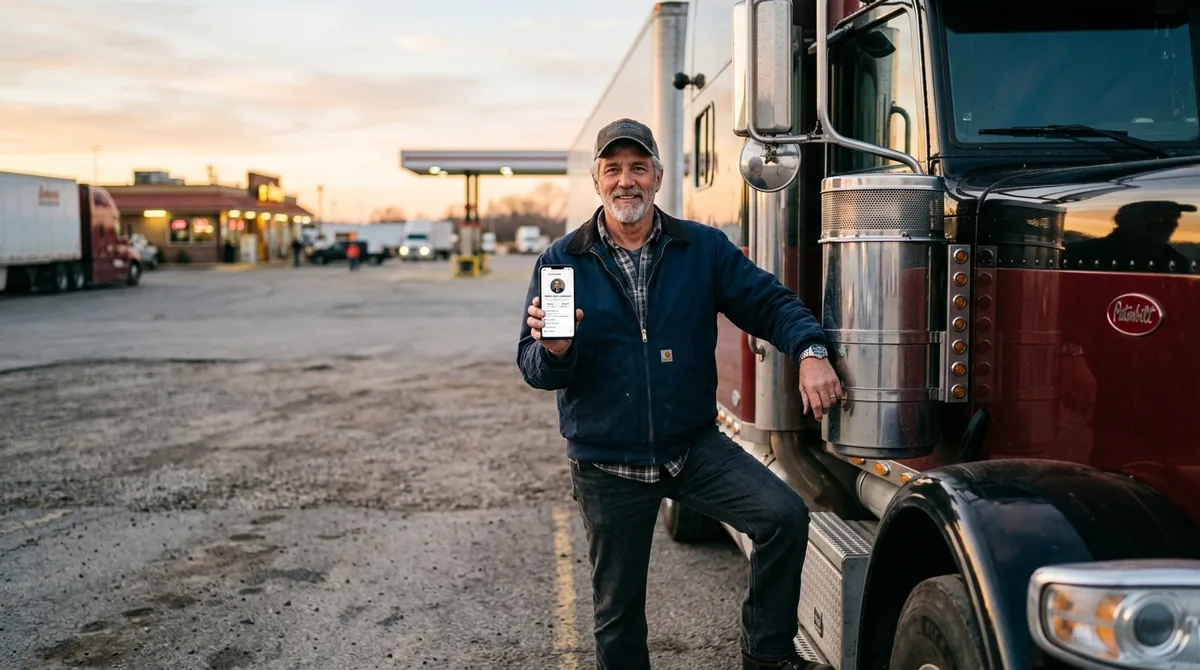
Driver reputation management is the work of knowing, building, and protecting the professional record that decides which trucking jobs and pay rates you can reach. In 2026 that record is no longer a clean MVR and a good word from your last dispatcher — it is a stack of databases you do not control, most of which only log your mistakes. Manage it on purpose, or let other people write it for you.
I have been around trucking since 2016 — first driving, then as an owner-operator, now running a small fleet — and the single thing that has changed most is how much of a driver's value now lives in data. Recruiters do not just call your old company anymore. They pull reports. What those reports say, and what they leave out, shapes the offer before you ever get on the phone.
Your record is already being tracked, whether you like it or not
Here is the part most drivers never sit down and map: there are at least five separate systems carrying your professional history right now. You did not opt into most of them, you cannot delete them, and only one is genuinely yours. Knowing who controls each one is the whole foundation of managing your reputation.
The five systems that follow you
- DAC report (HireRight). Employment dates, reason for leaving, rehire eligibility, accidents, and policy violations — written by your former employers. You are entitled to one free copy a year under the Fair Credit Reporting Act, and you can dispute anything inaccurate.
- PSP (Pre-Employment Screening Program). Pulled from FMCSA, this shows five years of crash data and three years of roadside inspection results. You can buy your own report at psp.fmcsa.dot.gov before a carrier ever sees it.
- MVR (Motor Vehicle Record). Your state DMV's record of license status, violations, suspensions, and accidents. The cleanest lever you control directly — drive clean and it stays clean.
- FMCSA Drug & Alcohol Clearinghouse. Federal registry of drug and alcohol violations and return-to-duty status. Register and monitor yours at clearinghouse.fmcsa.dot.gov so nothing posts without your knowledge.
- Informal references. Whatever your old safety manager or dispatcher decides to say when the next carrier calls. Nobody governs this one, which is exactly why it can hurt.
Read that list again and notice the pattern. Four of the five are designed to surface problems. The fifth is a phone call you cannot hear. Nowhere in that stack is there a column for the work you actually did well.
The blind spot: nothing tracks your good work
Every system above is built to catch trouble. None of them records that you ran 250,000 miles without a preventable accident, hit your delivery windows week after week, or trained three rookies who are still out there driving safe. If you are a clean, dependable driver, the official record does not reward you — it just fails to flag you.
That is the trap. In the current setup, the best outcome a great driver can hope for is to look identical to a mediocre one: a CDL number with no red flags. Your professionalism, the thing that actually separates you in a yard full of applicants, is invisible to the exact people deciding your pay.
It matters because hiring has moved upstream. A recruiter screens your DAC and PSP before the interview, and forms an opinion of you from records that, by design, can only count against you. Reputation management is how you put the other half of the story — the half that earns money — back in front of them.
What good reputation management actually looks like
This is not complicated, but it is deliberate. Five habits cover almost all of it, and none of them require more than an hour or two a year once you set them up.
1. Know what is on your record
Pull your DAC, PSP, and MVR at least once a year — not the week you start job hunting. Errors are far easier to clear when you are not under deadline, and you would rather find a bad entry on your own schedule than learn about it from a recruiter who has already gone quiet. Treat it like a DOT inspection of your own paperwork.
2. Document your own performance
Build a plain record of the things no database tracks for you. Over a few years this becomes the difference between answering "tell me about your last two years" with a shrug or with specifics. Keep it simple:
- Safety miles. Accident- and violation-free miles, with rough dates.
- On-time performance. Pull the percentage from your ELD or the company's load system if it tracks it.
- Training and endorsements. Courses completed, endorsements added, rookies you mentored.
- Recognition. Safety awards, driver-of-the-month nods, even compliments from shippers and customers.
3. Dispute errors the week you find them
If something on your DAC or MVR is wrong, file the dispute immediately. Under the Fair Credit Reporting Act, the reporting agency generally has 30 days to investigate, and the sooner you start that clock the better. Old bad data hardens — references calcify, people leave the company, and proof gets harder to dig up. If you need the full process, our step-by-step guide to disputing a DAC report walks through every stage, and if a carrier has misreported your history the DAC alternative explainer covers your options.
4. Build a reputation you actually own
The four government and employer systems are out of your hands by definition. What you need alongside them is a record you control — one that travels with you between carriers and finally counts the good alongside the bad. That is the gap platforms like Oculus Reviews are built to close: a verified driver reputation profile backed by identity verification, employment history, and two-sided reviews, where you decide who sees it. Unlike a DAC entry, it is not written about you by a company you no longer work for.
5. Leave clean, every time
When you part ways with a carrier — even one that treated you badly — leave like a professional. Give notice, return the equipment in good shape, and keep the exit interview calm. Trucking is smaller than it looks. The safety manager screening you next year may be the dispatcher you cussed out two companies ago, and that memory will be on the phone call no database shows you.
Why this matters more in 2026 than it used to
Reputation has always counted in trucking. Three shifts are making it count harder, and all three move in the same direction: more of your value is becoming visible, measurable, and permanent.
Hiring stayed selective even when drivers were scarce
The American Trucking Associations has tracked a structural driver shortage for years — it pegged the gap at a record of roughly 81,000 drivers in 2021 and has projected it could widen substantially by 2030 as veteran drivers retire. You might assume that scarcity would make carriers desperate enough to skip the background check. It has not. Insurance underwriters keep tightening standards, so a thin applicant pool has made carriers more careful about who they put in a truck, not less.
The data about you keeps getting more connected
ELDs, telematics, dash-cam footage, and the Clearinghouse are all feeding a more detailed picture of how you drive than existed even five years ago. Some of that data argues for you and some against, but none of it is going away. The only way to stay ahead of it is to manage it on purpose instead of finding out what it says when an offer evaporates.
Drivers have leverage — if they can prove it
The market has tilted toward drivers in a way it had not for a long time. You have more choices, and carriers have to compete for you. But leverage only works if you can show the full picture of your work, not just the absence of black marks. A documented, verified reputation is what turns "trust me, I'm a good driver" into evidence you can put on the table when you negotiate pay.
Build something that is yours
The companies that employ you will come and go. The dispatchers who love you or resent you will move on to other yards. Your DAC report, accurate or not, will outlast all of them. The one piece of this you can genuinely control is whether there is also a record that reflects the driver you actually are.
So do the boring, durable things. Pull your reports yearly. Keep your own log. Dispute errors fast. Leave every carrier clean. And build a profile somewhere you — not a former employer — hold the pen. When you are ready to put that reputation to work, you can browse driver jobs or compare carriers in the company catalog before you ever sign on.
Frequently asked questions
What is driver reputation management?
It is the deliberate practice of knowing what your professional records say, correcting errors, documenting your own performance, and building a verified profile you control. For a CDL driver it covers your DAC report, PSP, MVR, Clearinghouse status, and any reputation platform where the good work finally gets counted alongside the bad.
What records can hurt my chances at a trucking job?
Mainly your DAC report from HireRight, your FMCSA PSP record, your state MVR, and your Drug & Alcohol Clearinghouse status. Most carriers pull at least one before they interview you. Because these systems are built to log problems, a single inaccurate entry can cost you an offer you never knew you lost.
How do I check my own driver record before applying?
Request your free annual DAC report from HireRight under the FCRA, buy your PSP at psp.fmcsa.dot.gov, order your MVR from your state DMV, and register at clearinghouse.fmcsa.dot.gov. Do it once a year, not the week you start applying, so you have time to fix anything wrong before a recruiter sees it.
How long does it take to fix an error on my DAC report?
Under the Fair Credit Reporting Act, the reporting agency generally has 30 days to investigate a dispute once you file it. File the same week you spot the error, because old entries get harder to overturn as references calcify and the people who could confirm your side move on. See our DAC dispute guide for the full process.
Can a good driving record actually get me better pay?
It can, but only if you can prove it. Carriers and insurers reward verified safety and reliability, yet the official systems mostly track problems, not strengths. A documented record — safety miles, on-time numbers, and a verified reputation profile — is what turns your professionalism into leverage when you negotiate pay or pick between offers.
About the Author
Founder of Oculus Reviews. Former truck driver turned fleet operator with 8+ years in the trucking industry.
Join Oculus Reviews Today
Create your free account and start building your professional trucking reputation.
Related Articles
Is CDL Scan Legal? What a Driver Can Do About a Bad Entry
What CDL Scan is, whether the FCRA applies to a site that calls itself a social network, and the five written steps that give a driver the best chance of getting a false entry corrected.
How to Report a Trucking Company That Won't Pay You
Who can make a carrier pay: DOL Wage and Hour, your state, FMCSA, OSHA or small claims, with every deadline and a demand letter. WHD recovered $259M in FY2025.
Trucking Wage Theft: 12 Ways Carriers Short Your Pay
12 ways carriers short driver pay, from HHG miles to escrow, and how to catch each one on your settlement. Detention alone costs drivers up to $1.3B a year.